
New Delhi, May 3: The Indian Railways on Sunday issued guidelines to operate ‘Shramik Trains’ to ferry stranded migrant labourers, tourists, pilgrims and students among others to their native states. In the latest guidelines, Railways will print train tickets to specified destination as per number of passengers that have been indicated by originating state. The order said that local state government authority will have to handover tickets to passengers and collect ticket fare from the. Once the fare is collected from the travellers, the total amount needs to be handed over to Railways. .
On May 1, also marked as International Labour Day, the Indian Railways announced six "Shramik Special" trains for migrant workers, students and others who were stranded due to the lockdown. The train service came as a relief for the stranded people as the service started after more than a month of suspension of services. .
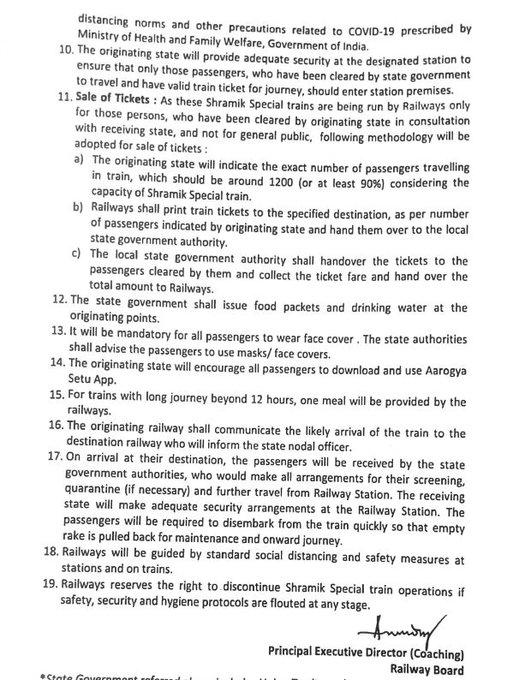
Take a Look at the Guidelines Issued by Railways:
Guidelines to operate ‘Shramik Trains’-Railways to print train tickets to specified destination as per no. of passengers indicated by originating state.Local state govt authority to handover tickets to passengers&collect ticket fare&handover total amount to Railways: Railways Min


The Railways had said that it will charge state governments for ferrying people stranded due to the coronavirus-triggered lockdown in its 'Shramik Special' trains. The fare would include cost of sleeper class ticket, superfast charge of Rs 30 and Rs 20 for meals and water per passenger. Each train is expected to carry 1,000-1,200 passengers.
The first such service was run with 1,200 passengers from Hyderabad to Jharkhand at 4:50 am on Friday. The other five include -- Nasik to Lucknow (at 9:30 pm), Aluva to Bhubaneswar (6 pm), Nasik to Bhopal (8 pm), Jaipur to Patna and Kota to Hatia (9 pm). These special trains will be run from point to point on the request of both the state governments concerned as per the standard protocols for sending and receiving such stranded persons.


No comments:
Post a Comment